

An unexpected win.
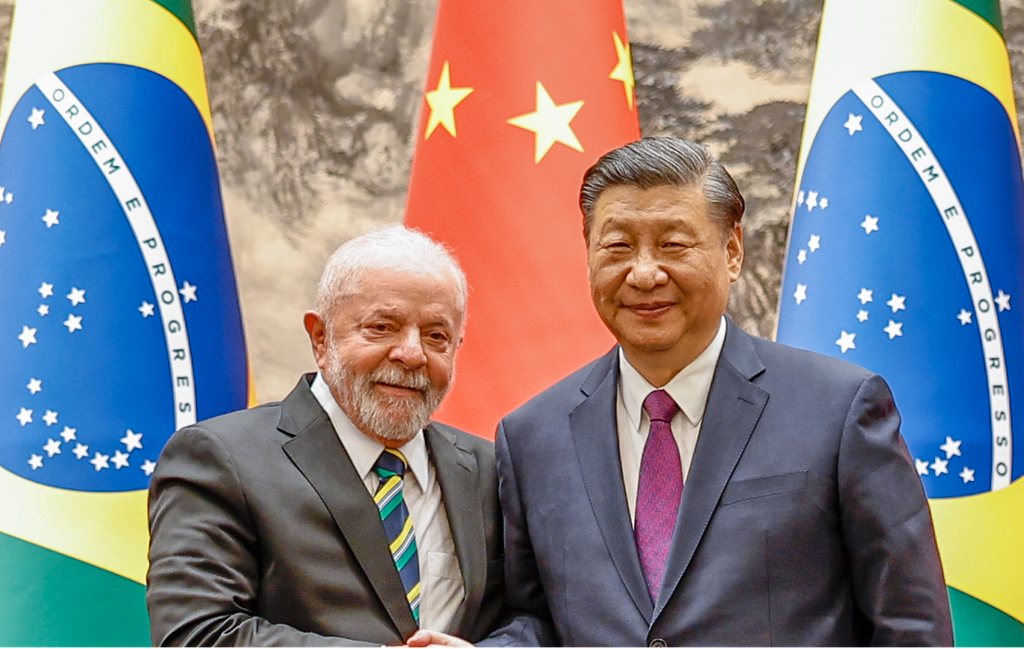
Following victory over far-right opponent Flávio Bolsonaro in the Brazilian presidential election, President Luiz Inácio Lula da Silva’s celebration of “democracy always” is also a promising outcome for the country’s commitments to climate action. Moving against the trend of far-right Latin American governments, such as those in Argentina, Colombia and Ecuador, Lula’s victory is likely to nurture the increasingly integrated Sino-Brazilian climate partnership, a key point of difference in comparison to Bolsonaro’s direction. However, for the US government, who have openly supported a Bolsonaro-run Brazil, strategic interests will be compromised. This can be credited to Lula’s pro-China views and environmentalist campaign.
The US is driving itself away
The current US administration is a polarizing force that has isolated itself from some of its most important partners. It has employed a unilateral approach towards addressing climate change, which it has described as a “con job”. This is best symbolized in its second departure from the Paris Agreement in January 2026, alongside the reversal of Biden-era emission limits, establishing a clear stance against climate action.
Denial impacts Washington’s bilateral relationships with both China and Brazil respectively. The shaky Sino-American economic symbiosis does not map evenly to shared environmental strategy. The two countries have shown adverse signs of commitment towards funding or solving climate change together, epitomized in a protectionist 100% tariff on Chinese electronic vehicles (2024) and the rebuttal of American accusations of antagonistic Chinese climate action at a November 2025 UNSC meeting.
The rise of China
China has taken on a reluctant role as the leading country in climate action.
At COP30 in Belém, Brazil, Chinese leadership and diplomacy played a significant role in a scene typically dominated by agents of the Global North. Chinese dominance of the electric vehicle market and renewables also aid in reinforcing Beijing’s role in climate diplomacy, in absence of the US. It is being held as an example and a pioneer in the international community, despite its inadequate “tiptoe forward” towards adequate climate resolution and action. This is prominent in unambitious Chinese emission reduction goals, which aim to cut emissions by 7-10% by 2035.
Loss of US and EU engagement with multilateral climate diplomacy creates space for Chinese climate advancements to visually outpace other countries. “Drill, baby, drill” pushes developing nations looking to transition away from fossil fuels towards the technological embrace of China, whose clean energy exports to countries like Pakistan, South Africa, and Thailand have helped avoid 374 million metric tons of carbon dioxide emissions in 2025 alone.
This concept applies to the Chinese-Brazilian relationship as well. A Lula victory in Latin America’s biggest democracy disrupts the successive election of pro-US state leaders in the region, and signifies the thickening of ties with China.
Energy as sovereignty is a core geopolitical tool, one that the US has used to solidify its own position as the world’s top energy exporter in light of the wars in Russia and Iran. The irony of China’s elevation to global leader in climate negotiations, given its status as the world’s largest emitter, broadly reflects the magnitude of US strategic failure. Above all, Chinese green investment benefits countries in the Global South that lack existing energy infrastructure, reflecting a broader shift of preference among developing countries from the US to China as a development partner.
Brazil’s comeback
Lula’s third term set out to reinstate Brazil as a world climate leader, setting mid-century zero-emissions goals and welcoming 31 clean energy projects in 2025 alone via Chinese investment. Combined with a strengthened role in BRICS, recent foreign policy has emphasised the importance of sovereignty, cosmopolitanism, and South-South cooperation.
State-led transition away from pollution, like that in China, is unseen in the American approach towards climate action. The current US administration typifies approaching sustainability goals with austerity, privatisation, and primary concern for domestic impact. In the bilateral Brazilian context, this can be seen in the deliberate exclusion of crucial rare earth minerals from US tariffs imposed on Brazilian exports, or the imposition of tariffs on Brazilian ethanol, a biofuel that can replace gasoline.
The kinship between Brazil and China, in comparison, is rooted primarily in their economic compatibility and interest in climate protectionism. Although both Global South powerhouses still concurrently maintain fossil fuel activities, it is far from the outright environmental skepticism employed by Washington. Whilst the US withdraws USAID in Brazil and international climate funds that help Global South countries, Sino-Brazilian climate cooperation has strengthened since Lula took office. China’s central development strategy heavily involves prioritizing long term energy transition, aligning with the Lula’s electoral promises and Chinese vested interests in South America.
In order for Brazil to meet its nationally determined contributions (NDCS) to reducing emissions, it needs to massively reduce deforestation in the Amazon and greenify its energy matrix, which is already one of the cleanest in the world. The former is one of Lula’s key deliverables; the latter is a niche that both the Chinese government and private-sector Chinese companies have been able to fill particularly well. BYD, for instance, opened their largest international production facility in Camaçari, Bahia, in July 2025.
This is alongside the climate finance developments between the 2 countries and the strengthening of trade symbiosis. Brazil’s mass exports of critical minerals to China are complemented by immense investments in Brazil, the top destination for Chinese investment in 2025.
A lot of the solutions that the US refuses, China provides. This notion was clarified in 2025 when COP30 President André Corrêa do Lago praised Chinese efforts in climate investment, proclaiming that “the Global South has many of the most important answers to climate change”.
What could be next
Unlike China, Brazil lacks a cohesive strategy to mobilise its resources towards climate readiness, using its environmental policy as a complement to central development strategy. Its stance towards climate change changes depending on the administration. Whatever actions Lula and Brazil take, the impact will be transnational due to their sovereignty of the Amazon rainforest. This sentiment of responsibility is also shared in its relationship with China, with respect to the carbon footprint of their joint ventures.
Edited by Kendall Fagan
Featured Image: President of Brazil, Luiz Inácio Lula da Silva, and General Secretary of the Chinese Communist Party, Xi Jinping, by Ricardo Stuckert, licensed under CC BY 2.0