

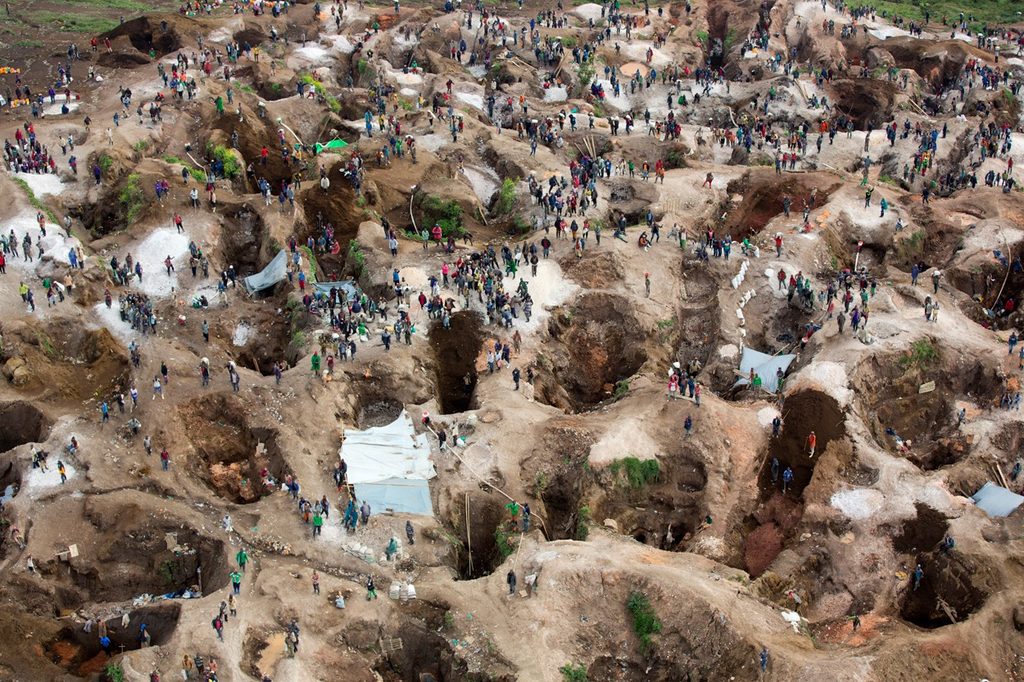
The cellphone is the basis for our day-to-day life, and it seems as time progresses, we are unable to live without it. While our phones are essential for our daily lives, providing us the ability to communicate and to sit down and scroll on TikTok to unwind, most people are not aware of how they are built. The chances are, the mobile devices that we depend on for our everyday pleasures contain a mineral called coltan, one of the world’s most sought-after minerals, which is largely concentrated in the Democratic Republic of Congo (DRC). According to the Institute for Security Studies, around 60% of the world’s coltan reserves are found in the DRC. Yet, this increasing reliance on phones to power our lives presents a major problem for security within the DRC and Central Africa. This is exemplified through the government of the DRC’s ongoing clashes with the M23 movement.
Theoretical Background: Exploitation of Natural Resources and Civil Conflict
The nature and the length of civil conflicts has often been a puzzle that scholars in security studies have often tried to solve. The central question has always been: why do certain conflicts endure while others are resolved easily? Scholars, such as Conrad et. al., have found that the exploitation of resources is directly linked to the duration of civil conflicts. The scholars distinguish between two methods: resource smuggling and resource extortion. Resource smuggling is when rebel groups smuggle natural resources, and resource extortion is when rebels extort natural resource production. They found that resource smuggling influences a longer conflict, while resource extortion does not have a significant impact on the duration of the conflict. This is because resource smuggling offers more flexibility and a diversity of revenues, which in turn empowers the rebel group’s ability to resist the government.
Rebel groups, by utilizing their vast resource-driven wealth, are able to resist the government and prolong conflict through several mechanisms. By holding resource wealth, peace brokering becomes a tricky business. Governments and rebel actors, inherently distrustful of each other, find it hard to commit to deals for peace because they both have a high incentive to maintain control over natural resources and to defect on resource-sharing agreements once peace is declared. Resource wealth also makes peace difficult as it provides steady funds for insurgents to stay armed and recruit combatants, sustaining operations. Moreover, insurgents can also use this wealth to co-opt local elites and bribe officials, which enhances their power to resist.
Groups, now, are increasingly securing physical resource sites over actual territory to maintain their operations and control. The African continent, which is home to a vast plethora of valuable commodities, has been increasingly impacted by this trend, as demonstrated by the M23 in the DRC.
The M23: Domestic and Regional Insecurity
The M23 represents the March 23 Movement, a rebel group primarily based in North Kivu, a mineral-rich province in eastern DRC. The name originates from the March 23, 2009 peace agreement that was signed between the National Congress for the Defense of the People (CNDP) militia and the DRC government. The group claims to be defending the interests of the ethnic Tutsi population in the DRC and aims to overthrow the current DRC government. While it was defeated in 2013, it was revived in late 2021 and has been active ever since. Along with other notable resources, M23 controls strategic mining hubs, such as the Rubaya mines, which provide around 15% of the world’s coltan supplies. The group often smuggles the coltan across the borders into Rwanda, and it has been imperative for sustaining the M23’s continuing fight against the DRC government. So, how does the M23’s use of natural resources to sustain conflict affect the security of the DRC and Central Africa?
Within the DRC, the government’s decades-long conflict with M23 has resulted in a perpetual state of human insecurity for the Congolese people. The government, wrought with conflict, has not been able to sufficiently protect and provide for its people because of its ongoing conflict. As a result, within the DRC, more than seven million people have been internally displaced due to the ongoing confrontations, especially in the M23 controlled Northern Kivu province. According to the Council on Foreign Relations, since the beginning of 2024, nearly 358,000 people have been displaced, and a “staggering 23.4 million Congolese suffer from food insecurity, making DRC the country most affected by food insecurity in the world.” Continued fighting within the DRC will only make this worse. Moreover, the M23 itself and its practices also present a grave threat to human security. The group has also been accused of committing forced labor in mining practices, committing sexual violence disproportionately towards women, and even using children as soldiers.
Not only does the M23 present a grave threat to human security in the DRC, but it also poses a grave threat to regional security. The M23 is backed by Rwanda and is part of Rwanda’s ongoing clashes with the DRC that date back to the 1994 Rwandan genocide. The BBC reported that, in 2024, the UN found that around 4,000 Rwandan troops were supporting and fighting with the insurgents; moreover, not only was Rwanda supporting the M23 militarily, but they were also heavily involved in dictating operations. On top of using the M23 as their proxy, Rwanda also heavily benefits from the M23’s ongoing exploitation of mineral wealth. Other countries, such as Kenya, Uganda, Burundi, South Africa and Tanzania, are involved (directly or indirectly) in this struggle. This has led to many scholars positing that these tensions, primarily driven by access to mineral wealth, could lead to a further escalating regional proxy war. This possibility would have disastrous consequences for the African continent, creating more humanitarian crises, erosion of diplomacy, and compromised security for everyone involved.
Conclusion
While the ongoing humanitarian crises and wars in conflict-ridden DRC may seem far away and entirely separate from us, it is imperative to remember that they are actually closer than they appear. As technology progresses and as the world becomes increasingly interdependent, events in distant countries are increasingly becoming directly linked to our everyday lives. The very technology that we use to do our schoolwork and navigate our day-to-day is becoming inextricably linked with the ongoing catastrophes in the DRC. As demonstrated by the case of the M23, our increasing need for minerals to power our devices has had a two-fold effect. It empowers insurgent groups, like the M23, who use smuggling of resources to prolong confrontations, which creates extreme threats to domestic security that disproportionately impacts civilians. It also creates incentives for other neighboring powers to try and control this lucrative business, creating threats to regional security. While it is impossible for us to cease our reliance on the minerals that power our devices, we cannot afford to remain ignorant of the human cost embedded in them. We must demand that the companies behind our technology adopt transparent, independently verified supply chains—and use our voices as consumers, students, and citizens to ensure that progress in the DRC is no longer paid for with the lives of its people.
Edited by Carly Waiz
Featured Image: “SRSG visits coltan mine in Rubaya” by MONUSCO Photos, CC BY-SA 2.0