
Written by : Ellie Litvack
Edited by: Bérénice Louveau
No matter the political party one subscribes to, there’s something everyone can agree on: current international relations are in a precarious position, and NATO is at the precipice of major change.
Back in 2019, U.S. President Donald Trump expressed interest in acquiring Greenland as an American territory. In late 2025, however, Trump doubled down, claiming Greenland is necessary for national security purposes. On January 3rd, Trump was quoted by the Atlantic, saying “We do need Greenland, absolutely.” On January 17th, Trump threatened 10% tariffs starting February first, followed by 25% tariffs starting June 1st if no deal was reached with Denmark.
Since the United States began its campaign to annex Greenland, members of NATO have been at odds. While Trump claims that Greenland is necessary to protect the country from Russia and China, his closest allies disagree. Canadian Prime Minister Mark Carney says that “we always will support sovereignty and territorial integrity of countries wherever their geographic location is.” Further, Mette Frederiksen, Denmark’s Prime Minister, said that Denmark will negotiate on anything except their sovereignty, and French President Emmanuel Macron called Trump a “bully.”
There is a general consensus among NATO that America is in the wrong. What does that entail for a future more uncertain than ever? Grieco, Ikenberry, and Mastanduno outline six potential versions of a future international order. The first, a world of geo-economic competition, involves powers competing based on economic abilities. Traditional military competition will be replaced with economic competition, and the ability to maintain prosperity in a world of scarcity will become imperative to state survival.
A second option is hardened borders and a nationalist world in which states close their borders, become skeptical of free trade and international agreements, and politicians become willing to put their countries over international order.
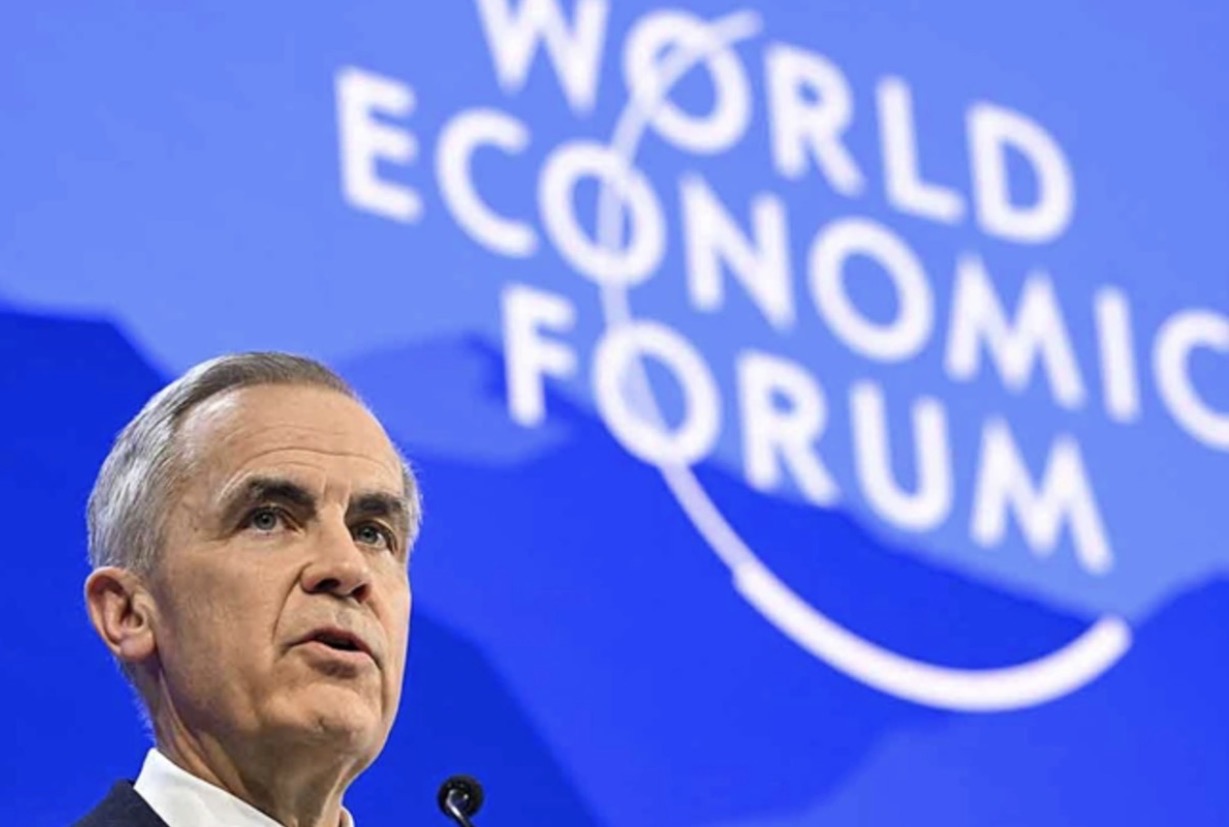
This is reminiscent of America’s current outlook and is cause for concern among the international community. The solution, however, seems pretty clear for Prime Minister Carney. His speech at the World Economic Forum, which drew a standing ovation, focused on a different potential world order. According to Carney, the international rules-based order that’s existed to know since WWII is under threat. Middle powers like Canada need to build strong domestic economies and diversify international agreements. In other words, Canada needs to stop relying on the United States.
Carney is suggesting a different kind of international order, one that Grieco, Ikenberry, and Mastanduno didn’t expect. Rather than closing Canadian borders or allowing economic superpowers to control smaller states, Canada must take hold of the future and create a new order, with or without the help of superpowers such as the United States.
The way forward is not easy in such a situation. Recently, Trump threatened to impose 100% tariffs if Canada begins a free trade deal with China. In late January, Trump had posted an altered picture of North America with an American flag covering all of Canada, the U.S, and Venezuela. As Canada’s interests shift away from the U.S., could the U.S. become more brazen in its foreign policy decisions? What does the future look like if middle powers no longer rely on the U.S? Mark Carney’s speech makes it clear that the world’s middle powers might be willing to chart a new path forward.