
Written by : Abigail Francis
Edited by: Ellie Litvack
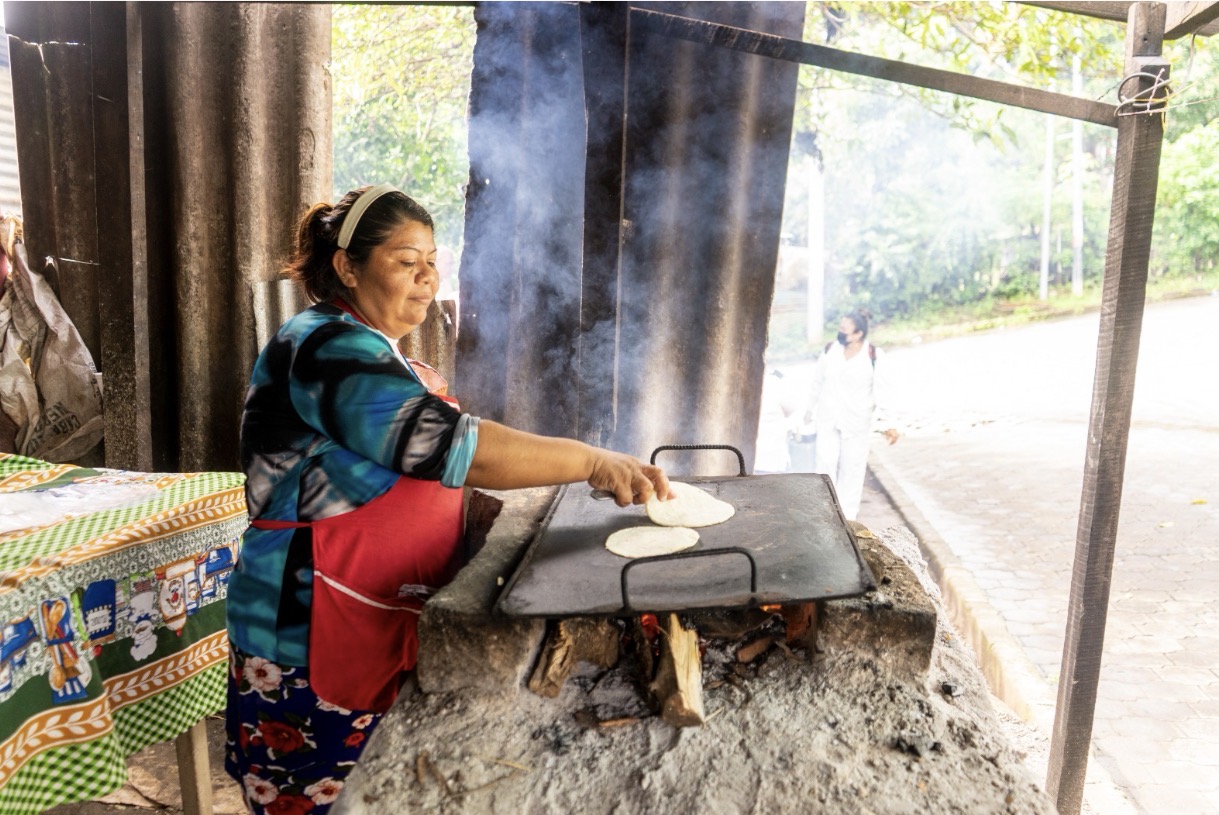
Across Latin America, women are more present in the workforce than at any other point in history, yet are still expected to contribute significantly more to domestic work than men
Latin America has experienced the sharpest decline in birth rate compared to any other region globally since the 1950s. Many attribute this decline to factors including access to the labor market, lack of state support, and access to birth control. Moreover, the push back from deeply ingrained expectations of motherhood could point towards the reason for this change. Simultaneously, due to Latin America’s rapidly aging population, the number of people over 60 is expected to nearly double by 2050. Thus, the region is entering into a care crisis, where the demand for care services—for both children and the elderly—exceeds available resources, leading to a gap between need and labor. This disproportionately impacts women.
Feminist theorists have long argued that capitalism depends on the invisible labor of social reproduction and the “care economy.” The care economy is “behind the scenes” work such as cooking, cleaning, childcare, and elder care that allows capitalism to continue by sustaining households and markets. While care often does not produce monetary value, it does create value for those who benefit from it. Care work uplifts the economy; existing measures suggest that unpaid care represents between 16 to 23 percent of Latin America’s GDP. The sexual division of labour and the unequal distribution of care work, however, continue to be one of the core structural challenges of gender inequality.
What is Care Labor?
Care as a concept is traditionally expected as part of a woman’s job within the patriarchal family model. Care in itself can be seen in a deeply personal way; an act of love and kindness for one’s family members, both intimate for the giver and receiver. On the other hand, unpaid care work within this model can be met with feelings of familial commitment and obligation. This gendered ideology of the woman as a caretaker and the man as a breadwinner limits the ways in which both genders see their identity and the ability to grow both professionally and emotionally. Simultaneously, it devalues care through the notion of the feminine inclination. This is the sexual division of labor. Even if unpaid care is done for personal satisfaction, it does not change the consequences when high-wage work is ignored and care is decoupled from economic activity.
In Latin American, women contribute three times more time to unpaid care labor than their male counterparts. A study by the International Labor Organization shows women in Latin America spend on average 6.3 to 29.5 more hours per week on unpaid care labor than men, representing 8,417 million hours weekly. These inequalities are one of the fundamental causes of socio-economic inequality for women—they limit the amount of time women can contribute to paid labor. To highlight this, in 2018, mothers with young children (ages 0-5) displayed the lowest employment rate among all workers in Latin America at only 47.6%. Notably, fathers of young children (ages 0-5) had the highest employment rate at 87.9%.
The Second Shift
But the patriarchal model of labor markets has been declining. As capitalism expands in Latin America, women have been allowed to contribute in the workplace more than ever before. Between 1990 and 2023, the percentage of women in Latin America working in the labor force rose from 8.8% to 51.3%. Although this is a positive step towards equality, another gendered burden emerges: a “second shift,” in which women participate in the paid labor market while simultaneously keeping their traditional duties of care labor. Men’s employment, on the other hand, does not affect the amount of time they spend on care labor. The consequences are twofold: limited free time in the day and forced participation in low wage sectors. Time is a sacred concept, and the double burden imposed on working class women does not allow adequate time to focus on important things like leisure, rest, and political participation. As a result, women experience energy and time poverty alongside income poverty. Furthermore, “second shift” women are more likely to face psychological stress and see themselves as being less healthy than their counterparts. Burdened with unequal care responsibilities, women are pushed toward flexible work arrangements that may ease immediate pressures but ultimately trap them in unstable positions within the labor market. Not only do 87% of employed women work in low productivity and often informal industry sectors with precarious wages, limited social security, and few benefits, “second shifts” also limit women’s ability to access high quality and high level jobs.
Inequalities in unpaid care labor extend beyond gender; factors such as income and race also shape its consequences. A higher income often reduces the amount of unpaid care labor within the household, as women can hire domestic help such as cleaners, nannies, and caretakers. Low-income households face a combination of long, underpaid working hours and additional unpaid care responsibilities, compounded by limited access to goods and services that could help reduce their care burden. As a result, unpaid care providers, mostly women, lack economic interdependence and social protection, especially in Indigenous and rural communities.
Social policies implemented around care in Latin America tend to be fragmented and lacking in overall framework, failing to meet the needs of lower income families. While some Latin American countries are pushing towards working care into the economic market, others are making it more difficult. Recently, Argentina’s President, Javier Milei, cut funding for sex education as well as contraception, a policy implemented only years before, connecting reproductive rights to the shrinking birth rate in the country. This rollback shows how states often instrumentalize women’s bodies and reproductive choices to serve demographic and economic goals, while neglecting the structural inequalities of unpaid care labor that discourage motherhood in the first place.
Building the Foundations of a Care Economy
There is, however, work being done within both governments and NGOs to combat this crisis. According to the UN, a care revolution in Latin America is “underway”; 17 countries are working towards redesigning how care is funded and recognized in the economy as a shared responsibility. Reclassifying care as an emerging productive sector by integrating it into the economy is essential. This framework creates new jobs – as many as 300 million globally by 2035 – and has direct and indirect investments such as returning women’s autonomy over their time and energy, boosting GDP, reducing poverty, and making social security more sustainable. Public care politics can also strengthen local economies by driving economic activity to reinforce local value chains. Panama’s national care law, which passed in 2024, stands as an example of such implementation. It is crucial, however, that these policies resist setbacks and remain sustainable through political transitions; fragmented or poorly framed initiatives can be easily reversed, just as Milei reversed sex education and contraceptive funding in Argentina.
Equally important is recognizing care as a human right and as a foundational element that underpins both societal well-being and economic systems. Doing so uplifts the often invisible labor of women and affirms its centrality to social and economic life. A well-designed care system can redistribute responsibilities among all family members, helping to bridge gender inequalities and allowing both men and women to more fully develop their identity and personal growth.